
In a free-wheeling interview with Jyoti Mukul, Sibal makes a case for his innocence and blames the media campaign by the Anil Ambani group for the current controversy.

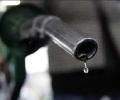
"I am not of the view that diesel price deregulation is inevitable and that is the position taken by petroleum ministry right now. Given the inflationary situation right now, we don't want to do that...," chief economic adviser Kaushik Basu told reporters on the sidelines of a CII event here.
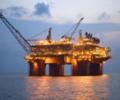
Continuing its attack on Petroleum Ministry, Anil Ambani group on Thursday criticised it for its failure to attract top global players for oil and gas exploration and production due to lack of sanctity attached to concluded contracts.
Delhi may become the first state to move to direct cash pay-outs of subsidies on kerosene sold through the public distribution system (PDS). The petroleum ministry said it has "welcomed" a proposal to this effect from the Planning Commission, which acted on a plan suggested by Delhi Chief Minister Sheila Dikshit.

The government allowed sugar companies and distilleries to make hand sanitizers using ethanol. Sugar companies supply ethanol to oil marketing companies for blending with petrol.

The Petroleum Ministry has allocated additional natural gas from Reliance Industries' eastern offshore gas fields to three power plants to meet electricity deficit in northern states reeling under drought.
After natural gas prices, the government looks set to bite the bullet on auto fuel prices, with a panel of ministers scheduled to meet on June 7 to decide on freeing petrol and diesel prices.
RIL president and CEO (Oil and Gas) PMS Prasad, who met petroleum ministry officials to discuss under capacity production from the company's KG basin fields, said: "We have time till July 15 to decide. . . we are still evaluating our options."

State-owned Oil and Natural Gas Corp (ONGC) may have won a large oil block in Venezuela but the Petroleum Ministry wants Reliance Industries to join the project to give stability to the venture.

Cairn India can produce up to 2,40,000 barrels per day from its prolific Rajasthan fields, equivalent to output from the nation's largest oilfield of Mumbai High, the company has informed the government.
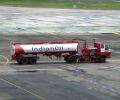
As per the current market price, the government is expected to fetch Rs 5,300 crore (Rs 53 billion) by selling 10 per cent equity or 24.27 crore (242.7 million) shares at discounted price to Oil and Natural Gas Corporation and Oil India Ltd.
The Prime Minister's office is understood to have declined an extension to Subir Raha, the high profile chairman of Oil and Natural Gas Corporation.
The petroleum ministry has said that fuel prices should go up by Rs 10.43 a litre and cooking gas price by Rs 114.45 per cylinder, with the Left parties opposing the move.
A couple of months after exiting the Petroleum Ministry, Mani Shankar Aiyar on Thursday lashed out at the way the top bureaucrats functioned in the ministry.
Companies such as ONGC and Reliance have not been able to meet their work commitments for the blocks they had won under the New Exploration Licensing Policy rounds because of a crunch in availability of deep-sea drilling rigs. The official said oil ministry is moving a note for the consideration of Cabinet Committee on Economic Affairs for giving a drilling holiday from January 1, 2008, to December 31, 2010, for 33 blocks awarded in the fifth round of NELP.

The CII feels the 20-year scheme was introduced to boost domestic industry and provide a platform to Indian industry to compete with their foreign counterparts.
The finance ministry has asked state-run oil companies to shell out an interim dividend of Rs 2,600 crore (Rs 26 billion) for the year to March 2003, a government official

Under attack for alleged favours granted to Mukesh Ambani-led Reliance Industries, director general of hydrocarbons, VK Sibal has sought protection from the government fearing a threat to his life from Anil Ambani group - a charge denied by ADAG.
Anil Ambani-promoted Reliance Natural Resources has filed an affidavit in the Bombay High Court in the case involving Reliance Industries, refuting the petroleum ministry's stand that the government-approved price of $4.2/million metric British thermal unit (mmBtu) is the selling price of gas.
The government has asked Reliance Industries to supply natural gas from the company's eastern offshore D6 fields to the beleaguered Dabhol power plant, a segment that gets top preference for gas allocation along with fertiliser units.

IOC, in the annual performance memorandum it signs with the petroleum ministry, stated that the Navratna oil companies should be granted freedom to fix retail selling price of petrol, diesel, domestic LPG and kerosene.

A massive drone strike on the world's largest crude-processing facility operated by Saudi Arabia's Aramco has driven oil prices to their highest level in nearly four months. The attack has knocked out over half of Saudi Arabia's production as it cut 5.7 million barrels per day or over 5 per cent of the world's supply.

The government may give poor people LPG stoves free of cost as part of its blueprint to expand domestic cooking gas coverage to at least three-fourth of the population.

Government's counsel Mohan Parasaran has said he was left out of the details of a special leave petition filed by petroleum ministry in Supreme Court seeking annulment of a family MoU between Mukesh and Anil Ambani group firms on gas supply.
The first of the promotional roadshows for 70 blocks offered under the eighth edition of New Exploration Licensing Policy and 10 coal-bed methane areas will be held in Mumbai on August 8, a petroleum ministry official said. On April 9, India launched the eighth round of auction to give away blocks for exploration under NELP with August 10 being the last date for bidding. But it was deferred over ambiguity on tax holiday for natural gas.
Three oil companies have submitted a concept paper to the petroleum ministry for differential pricing of diesel for direct consumers like Railways and power producers who they want to charge market price and limit subsidised sales to transport and agriculture sectors, sources said. Industrial units like power generators find subsidised diesel cheaper than freely priced fuel oil and naphtha, pushing demand that has forced refiners import the fuel to meet the requirement.
Domestic LPG costs Rs 348.89 less than the cylinders meant for commercial use and this difference often leads them into restaurants and hotels who are supposed to use only industrial LPG, a Petroleum Ministry official said. All cylinders will be tagged with a unique number and consumers will be issued smart cards. Every time a refill is delivered, the unique number would be stored on the smart cards.
